Gold Above 4,000 Dollars: The Central Banks' Quiet Vote Against the Dollar
Gold trades at around 4,175 dollars an ounce, almost twice its level of two years ago. The most important buyers are not speculators but institutions that never intend to sell again.
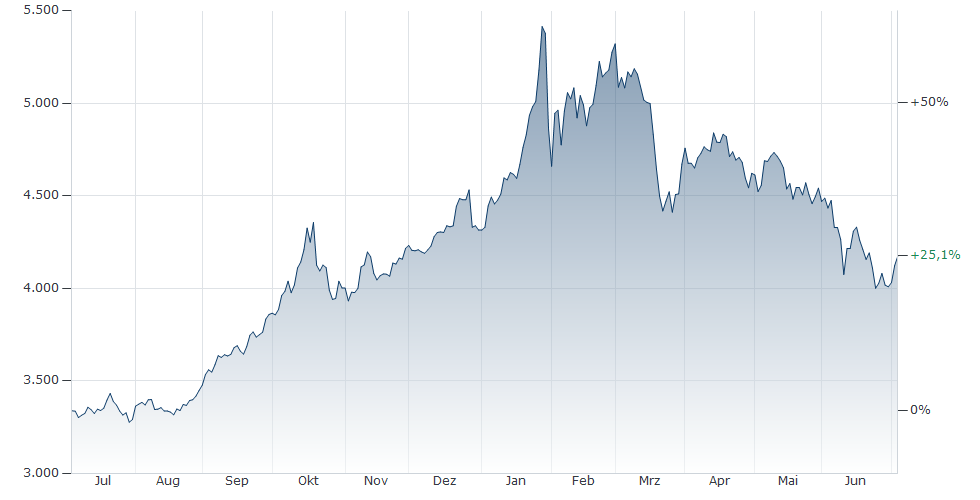
In early July 2026, an ounce of gold costs around 4,175 dollars, after a record high of around 5,400 dollars in January. Central banks bought a net 244 tonnes in the first quarter alone. The price measures less a crisis than fading trust in dollar based reserves.
In early July 2026, an ounce of gold costs around 4,175 dollars, and even after the correction that followed the Islamabad Memorandum, the price stands almost twice as high as two years ago. The market set its record in January 2026 at around 5,400 dollars, in the middle of the escalation before the Iran war.
Anyone reading this rally as a war premium or a speculative bubble misses the structural core of the move. The most important buyers in this market are not hedge funds but central banks, and for four years they have been buying almost regardless of price.
The Buyers Who Never Sell
In the first quarter of 2026, central banks bought a net 244 tonnes of gold according to the World Gold Council, three percent more than a year earlier and seventeen percent more than in the fourth quarter of 2025. That extends a pattern in place since 2022, with net purchases at or near one thousand tonnes annually from 2022 to 2024, and 863 tonnes in 2025.
The People's Bank of China stands out. It raised its buying pace from roughly one tonne per month through February to five tonnes in March and eight tonnes in April, at prices that have never been higher in history. Institutions that add at all time highs are not buying because of the price. They are buying despite the price, because the motive is not return but independence.
Why 2022 Changed Everything
The turning point of this development lies in the spring of 2022, when Western states froze around 300 billion dollars of Russian central bank reserves. For governments across the Global South, that was a lesson with lasting effect, dollar reserves held in Western accounts can be politically confiscated in an emergency, physical gold in one's own vault cannot. A quiet reallocation has been running ever since, gaining momentum with every geopolitical conflict.
Add to that the American fiscal picture this newsletter has described repeatedly. US interest payments exceed the defense budget, Moody's cut the credit rating to Aa1 in May 2026, and the debate over the Fed's independence under its new chairman Kevin Warsh has not gone quiet. Each of these developments alone would be manageable. Together they create an environment in which the question of an alternative to the dollar no longer sounds ideological but like risk management.
What the Price Actually Measures
The war premium was real, but it explains only part of the move. On the day of the Islamabad Memorandum, gold fell 1.8 percent, a visible discount for peace, and yet weeks later the price still trades above 4,000 dollars. Demand from exchange traded funds continues, so does the expectation of falling interest rates, and central bank buying runs independently of both.
In the end, this price measures less an acute crisis than a slow loss of trust in a system in which reserves consist of dollar claims. The open question is not whether gold has become too expensive. It is what it says about the state of the global monetary system when its own custodians, the central banks, convert a growing share of their reserves year after year into a metal that knows no counterparty.